A preprint of our new paper is now on BioRxiv
In case you’re running out of reading material on the testate amoeba family Arcellidae, here’s a link to the preprint of our new paper: https://www.biorxiv.org/content/10.64898/2026.08.19.745684v1.full
We update many aspects of this interesting group, but if I had to choose a headline I guess it would be this: Joseph Leidy–the last man who knew everything–was right all along. Sort of.
In his beautiful monograph of 1879, Fresh-water Rhizopods of North-America, Leidy illustrates an assortment of shelled amoebae he considers morphotypes of the species Arcella mitrata. Leidy was, by modern standards, a “lumper,” and at least two of his “Arcella mitrata” are now assigned to other species: Arcella spectabilis, and A. leidyana. The name A. mitrata is now reserved for arcellids with smooth, balloon-shaped shells, similar to the one in figure 2 of his plate XXIX (see below).
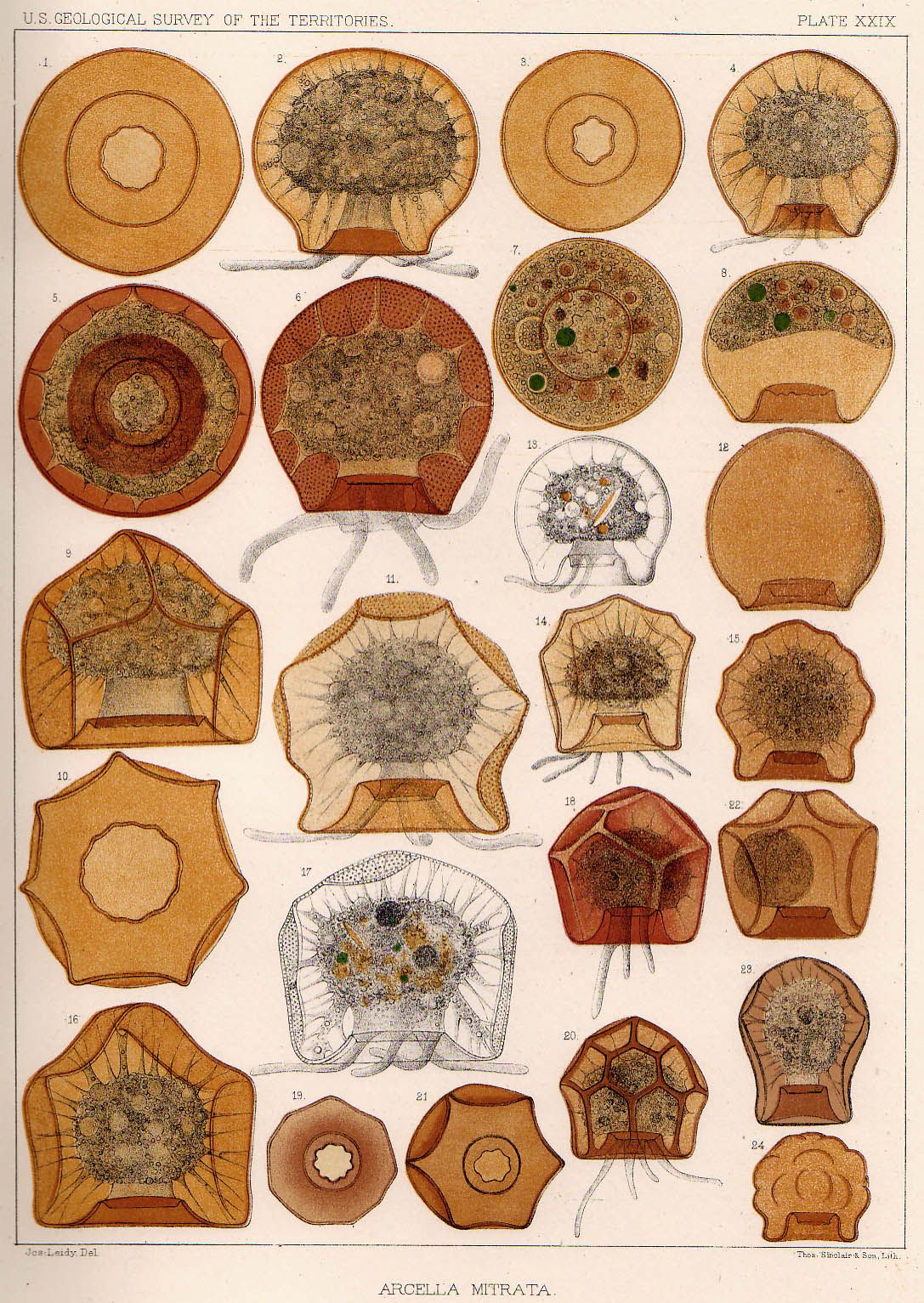
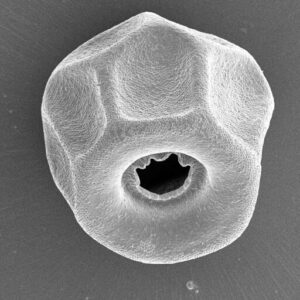
All of these are “tall-shelled” taxa with steeply angled sides, and all have “crenulated” apertures with lobed or wavy outlines. They share these traits with a new species we described last year, Arcella prismatica. At the time of publication, we had not succeeded in obtaining a gene sequence for any of these species, which left us with unanswered questions about how these critters might be related to one another.
In our new paper, I’m happy to say, some of these questions have been answered.
We’ve retrieved gene sequences for each of these “tall-shelled” morphotypes, which happen to bloom in the bog pools where I gather samples. Our phylogenetic analysis confirms that these fall into distinct lineages, and are certainly not one species as Leidy had thought. However, these separate lineages do group together as a strongly-supported clade within the genus Arcella, which corroborates Leidy’s intuition that they “belong together.” It also lends a bit of support to the morphological hypothesis of a later researcher, Georges Deflandre, who placed these species–along with some tropical ones that have a similar shape–in a taxonomic “section” he called Altae.
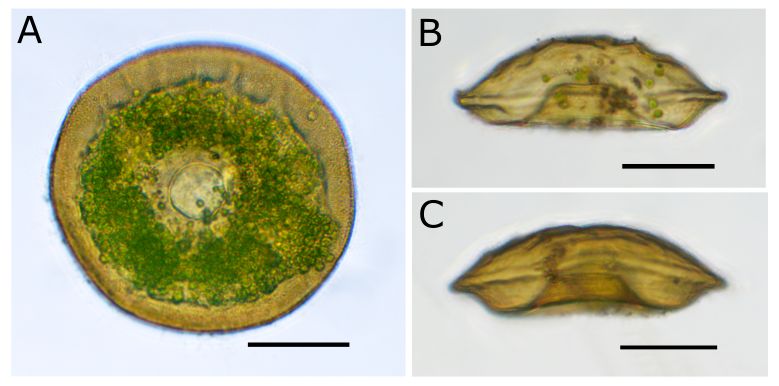
Our work on this group has led to some other adjustments to the Arcellidae. One of the most exciting, to me, is the rediscovery of the “nominotypical” form of Arcella artocrea, the only known member of the family that has endosymbiotic algae. This pretty, green thing was described by Joseph Leidy in 1876, but has not been reliably recorded in the published literature since then.
The species itself was recently transferred to Galeripora, a genus with a convenient diagnostic character, the presence of pores surrounding the aperture of the shell. However, our work confirms that the green morphotype originally described by Leidy as Arcella artocrea lacks those pores, and analysis of its COI gene puts it in a basal position within Arcella, well apart from Galeripora.
In the century and a half since Leidy found this green Arcella in a New Jersey bog, there have been many records of colorless specimens of “Arcella artocrea” with conspicuous pores around the aperture. Leidy himself illustrates one of these in his monograph, a morphotype later set apart by Deflandre as Arcella artocrea var. pseudocatinus. All of these records should be assigned to the genus Galeripora, mostly as members of the species we’re now calling G. pseudocatinus.
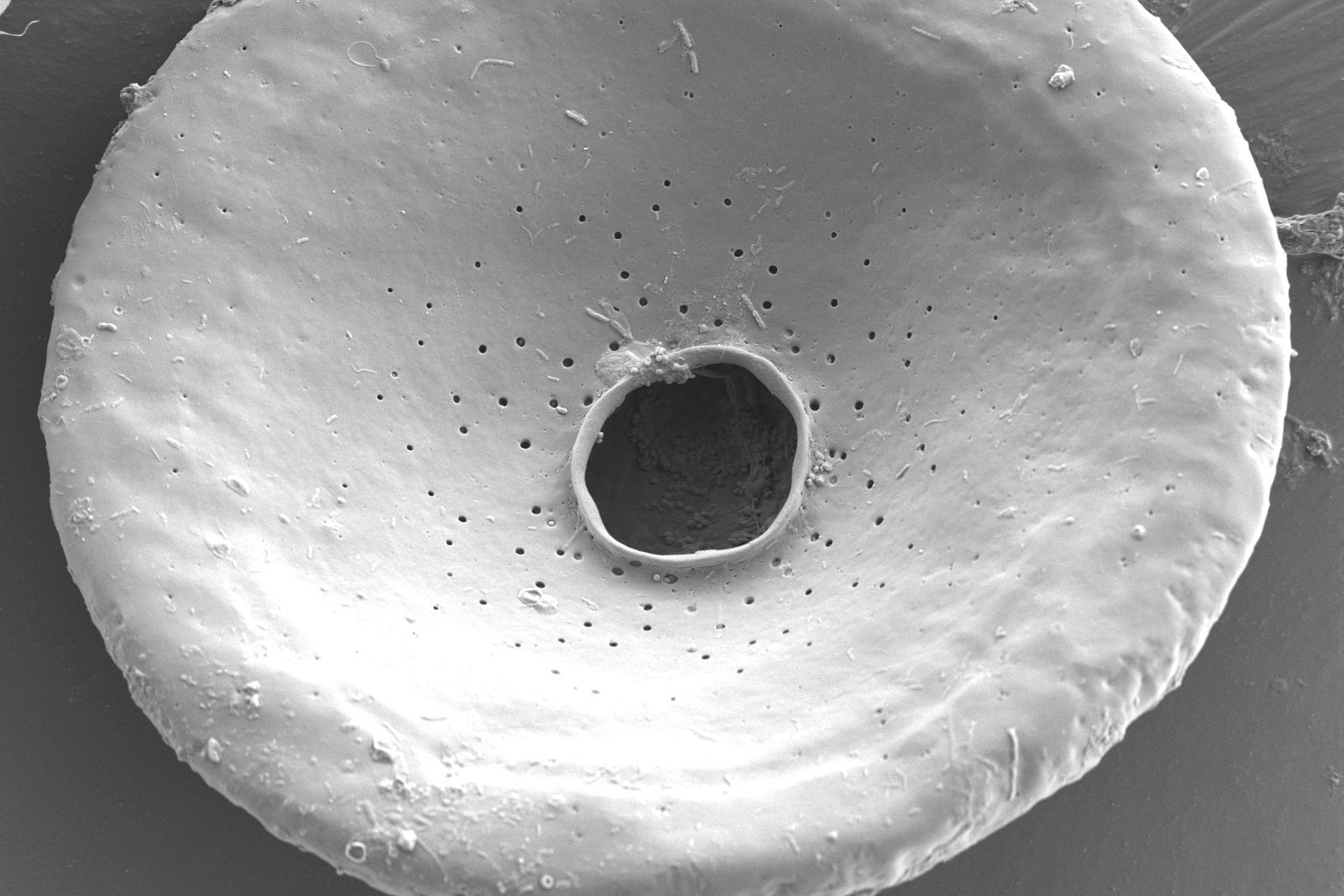
Speaking of Galeripora, about this time last year I looked at some debris from a calcareous fen in eastern Ontario and found a new morphotype of that genus, which we describe in our paper as G. purdoni. This one not only has a ring of pores around its aperture…it has a scattering of them all over the ventral face of the shell.
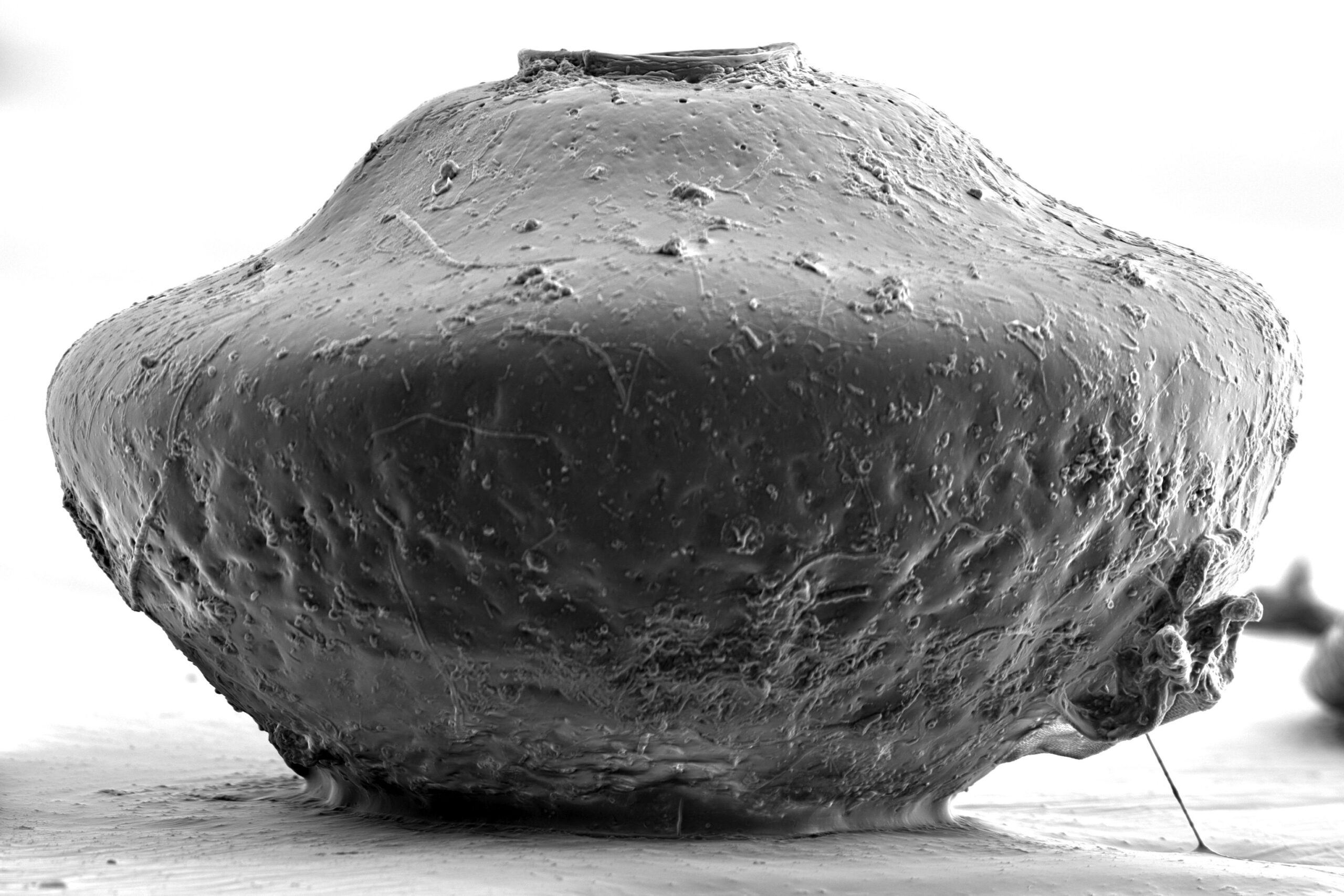
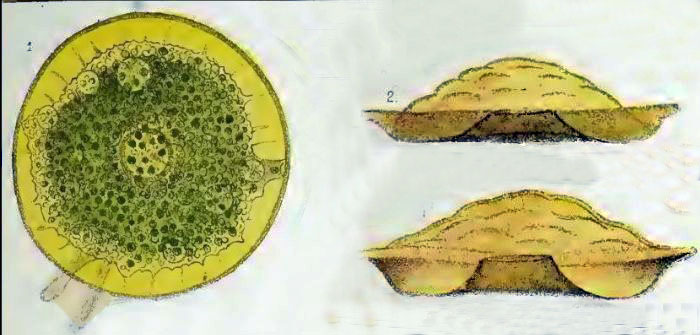
It also exhibits a trait known from at least two other species of Galeripora: when the amoeba inside the shell enters dormancy and forms a resting cyst, the whole thing puffs up like a Jiffy Pop pan. The ventral surface of the shell, normally concave, as in the image above, pops out and becomes convex.
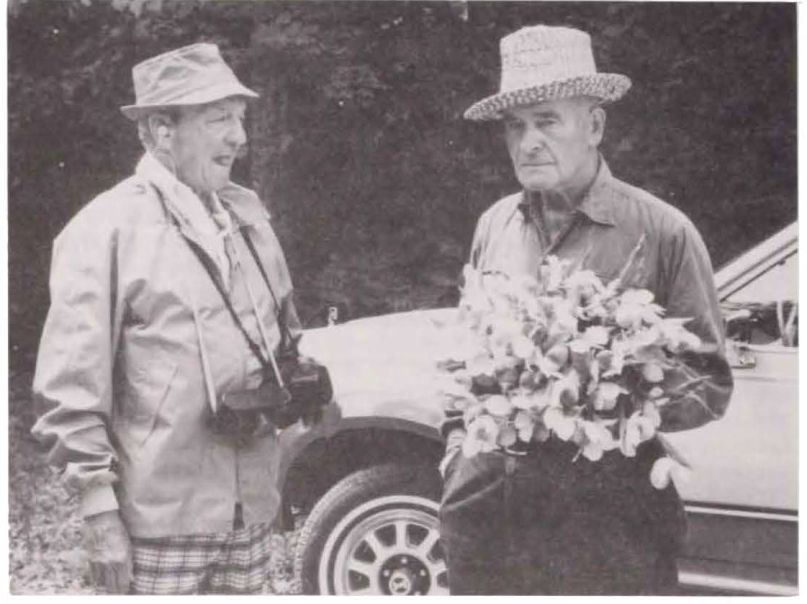
We’ve named the species after a farmer and boatbuilder named Joe Purdon, who spent nearly five decades tending the plot of land now known as Purdon Conservation Area. Purdon’s mission was to protect and encourage a rare orchid called the Showy Lady’s Slipper orchid, which still blooms by the thousands at the site. He could not have known that the distinctive habitat that supports this gorgeous flower also happens to provide the right conditions for a shelled amoeba that, so far, has been found nowhere else.
Our final finding is potentially the most consequential one. Our phylogenomic analysis of material retrieved from the Protist 10,000 Genomes project uncovers evidence of a previously unknown deep‑branching lineage within the family, basal to both Arcella and Galeripora. The sequence retrieved from the P10K database comes from an organism collected in a high‑altitude saline lake in Tibet, and in our analysis clusters with another arcellid known to thrive in saline conditions, the recently described species Arcella euryhalina. Together, these form a distinct lineage that may represent a fourth genus within Arcellidae.